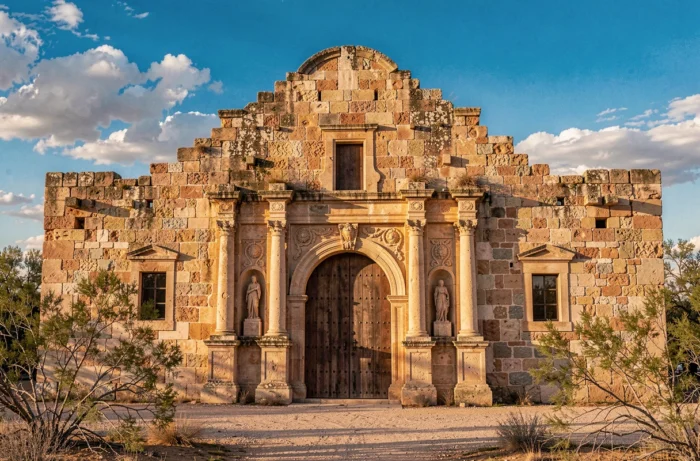
In February 1836, an old Spanish mission transformed into a fort hosts fewer than two hundred Texan fighters. Opposing them, General Antonio López de Santa Anna mobilizes several thousand Mexican soldiers. The siege of Fort Alamo, which will last thirteen days, will become one of the most famous episodes of the Texas Revolution and American history.
The Alamo before the siege: a Spanish mission turned military position
Before becoming a battlefield, the Alamo was a Franciscan mission founded in the early 18th century in San Antonio. Spanish missionaries evangelized the indigenous populations there, and the complex included a stone chapel, housing, and a fortified courtyard.
Why did this place become a military post? After the secularization of the missions, the Mexican army established a garrison there. The thick walls and the geographical position of San Antonio, on the route connecting Mexico to the heart of Texas, made it a strategic point. When Texan settlers rose up against Santa Anna’s centralist government, they seized the city at the end of 1835.
It was at this moment that the question of maintaining the garrison arose. Sam Houston, commander-in-chief of the Texan forces, would have preferred to abandon the position. Colonel James Neill, followed by William Travis and James Bowie, made the decision to fortify the Alamo and defend it. Among the volunteers who arrived as reinforcements was also the former Tennessee congressman Davy Crockett, already a famous figure at the time.
To delve deeper into the history of the Alamo in Texas, one must trace back this gradual transformation from a place of worship to a symbol of armed resistance.
Thirteen days of siege at Fort Alamo: Santa Anna’s strategy
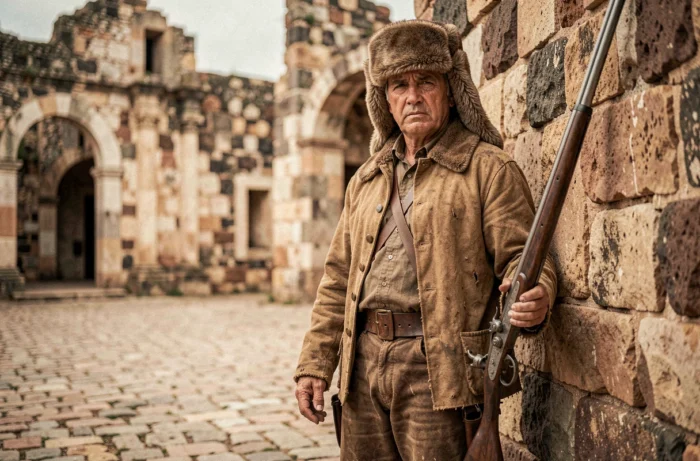
On February 23, 1836, the Mexican army arrives at the gates of San Antonio. Santa Anna commands a force that is vastly superior in number. He raises a red flag, a traditional signal indicating that no quarter will be given.
The Texan defenders take refuge within the walls of the Alamo. Travis sends several letters requesting reinforcements. The most famous, addressed “to the people of Texas and all Americans around the world,” states that he will never surrender. This letter will become one of the most quoted documents in Texas history.
Daily bombardments and war of attrition
In the following days, Mexican artillery bombards the walls continuously. Santa Anna’s goal is twofold: to weaken the physical defenses and to exhaust the morale of the besieged. The nights are punctuated by gunfire and maneuvers to prevent the Texans from sleeping.
The defenders retaliate with a handful of cannons. They plug the breaches with earth and wood. A few reinforcements manage to sneak into the mission during the first days, bringing the number of fighters to around two hundred. After that, no one else will come.
- Travis commands the regular garrison and ensures defensive coordination from the northern walls.
- Bowie, sick and bedridden for a good part of the siege, retains authority over the civilian volunteers.
- Crockett and his men from Tennessee defend the southern palisade, the most vulnerable section of the enclosure.
Santa Anna refuses to launch an immediate assault. He waits for reinforcements and additional artillery pieces. This thirteen-day wait is a deliberate strategic choice, not a hesitation.
The final assault on March 6, 1836: events and casualties
In the early hours of March 6, Santa Anna launches the general attack. The Mexican columns converge from four directions. The initial assaults are repelled, with defenders firing from the walls at close range.
During the third wave, Mexican soldiers breach the northern walls and pour into the inner courtyard. The fighting becomes brutal hand-to-hand combat in the buildings and corridors of the mission. Travis dies on the ramparts. Bowie is killed in his room. The fate of Crockett remains debated by historians, with some Mexican sources suggesting he was captured and then executed.
In less than two hours, the battle is over. Almost all of the Texan defenders are killed. The Mexican army also suffers significant losses, with estimates varying according to sources. Santa Anna orders the bodies of the Texan fighters to be burned.
Survivors and witnesses of the fall of the Alamo
A few people survive the battle. Susanna Dickinson, the wife of a Texan officer, is spared along with her daughter. Santa Anna charges her with delivering a message to the rebel settlers: any resistance will be crushed. Joe, an enslaved man belonging to Travis, also survives. Their testimonies will constitute the first direct sources on the fall of the mission.
“Remember the Alamo”: a defeat that became the driving force of Texan victory
The news of the massacre spreads quickly. Sam Houston uses the fall of the Alamo to galvanize his troops. The rallying cry “Remember the Alamo” is born in the weeks that follow.
On April 21, 1836, at the Battle of San Jacinto, Houston’s Texans crush Santa Anna’s army in less than twenty minutes. The Mexican general is captured. This victory leads to the creation of the Republic of Texas, independent from Mexico.
The sacrifice of the Alamo played a concrete role in this turnaround. The thirteen days of siege delayed Santa Anna’s advance, giving Houston time to gather and train his army. The anger provoked by the massacre transformed a fragile rebellion into a massive mobilization.
- The siege kept the Mexican army in San Antonio for nearly two weeks.
- Travis’s letters attracted the attention of volunteers from other American states.
- Susanna Dickinson’s account fueled the press and public opinion against Santa Anna.
The Alamo today: a historical site and contested memory
The chapel of the Alamo, the only original building still standing, has become the most visited monument in Texas. Since 2024, the site has undergone significant redevelopment. The Paseo del Alamo, a pedestrian link between the mission and the River Walk in San Antonio, reopened on July 1, 2026, with a new visitor center that includes a ticket office and an elevator connecting the river level to the street.
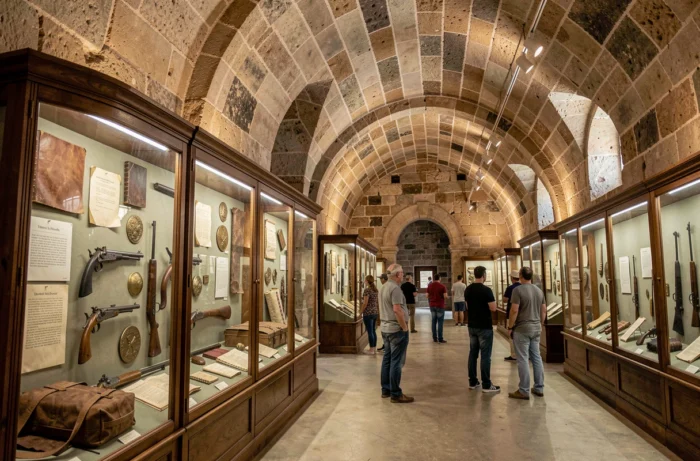
The memory of the Alamo is also the subject of debate. The exhibition “Sons of ’76: The Alamo in the Age of Revolutions,” presented by the Alamo Trust, places the siege in the broader context of Atlantic revolutions. This approach marks a turning point from the traditional narrative focused solely on the heroism of the Texan defenders, integrating Mexican and indigenous perspectives.
The Alamo is no longer just a battlefield frozen in bronze. It is a living place, whose historical interpretation continues to evolve with contemporary research and sensitivities.