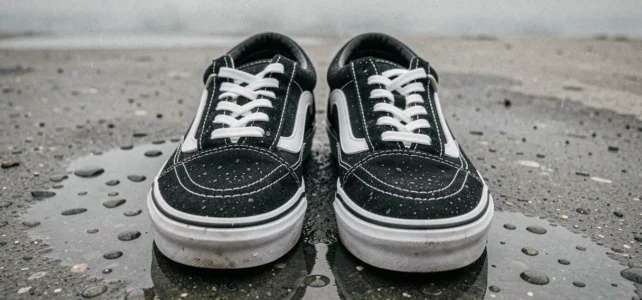
The Vans Old Skool are built on a base of canvas and suede, two naturally porous materials. Protecting these shoes from rain requires understanding how water interacts with these fibers, and then choosing a treatment suitable for each area of the shoe. The European regulatory context regarding waterproofing products has recently changed, which also affects the choice of sprays available on the shelves.
PFAS Regulation and Waterproofing Sprays: What Changes for Your Vans
Before choosing a product, it is important to know that the market for waterproofing sprays is undergoing a significant regulatory transformation. PFAS (perfluoroalkyl and polyfluoroalkyl substances), which have long been used in water-repellent treatments for shoes and textiles, are facing increasing restrictions in Europe.
France has banned since January 1, 2026, the manufacture, import, and marketing of impregnation products containing PFAS, with specific analytical thresholds (25 ppb per individual PFAS, 250 ppb for the total). Denmark has published a similar order (BEK no. 464 of May 2, 2025). At the European level, Regulation (EU) 2024/2462 restricts the use of PFHxA in consumer textiles and shoes starting October 10, 2026.
In practice, fluoropolymer sprays that dominated the market are gradually disappearing from French shelves. If you find an old fluorine-based bottle at home, it still works, but PFAS-free alternatives are now the norm in stores. This transition shifts the choice towards two families of products: silicone-based sprays and fluorine-free nano treatments.
To fully understand the specific issues related to this model and know how to make your Vans Old Skool waterproof, you must first distinguish between the canvas areas and the suede areas, as they react differently to treatments.
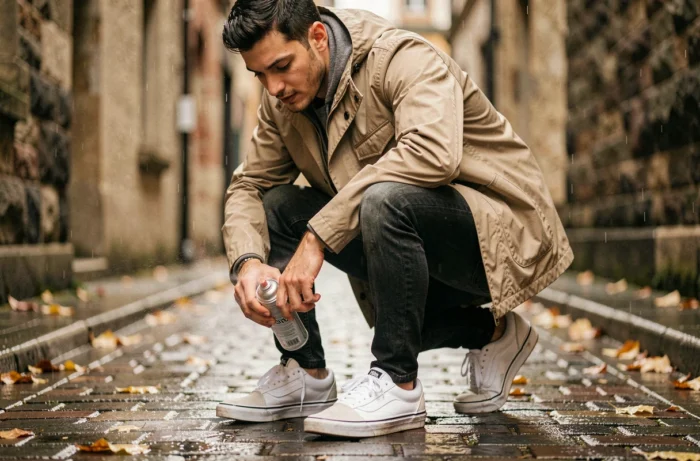
Silicone Spray or Fluorine-Free Nano Treatment: Which Product for Canvas and Suede
The Vans Old Skool generally combine canvas (cotton/polyester fabric) on the side panels and suede on the toe cap and side stripe. These two materials require different approaches.
Canvas
The canvas absorbs water quickly because its woven fibers create micro-capillary channels. A silicone spray deposits a hydrophobic film on the surface that causes droplets to bead. The application is simple, and the result is visible immediately. Silicone works well on canvas, but it may slightly alter the feel of the fabric (making it a bit stiffer).
Suede and Nubuck
Suede is more delicate. A too-dense silicone spray risks darkening the color and flattening the velvety fibers. Fluorine-free nano treatments are preferable for this material: they coat each fiber individually without creating a continuous film, preserving the matte appearance and texture. On a two-tone model, it is entirely possible to use two distinct products, one for each material.
- On the canvas: classic silicone spray, sprayed in thin layers from about twenty centimeters away, on a clean and dry shoe
- On the suede: PFAS-free nano spray, applied in light passes, with two layers spaced by fifteen minutes of drying time
- On the vulcanized rubber sole: no treatment necessary, as Vans rubber is already waterproof by nature
Application Protocol for Vans Old Skool: Steps That Change Durability
A waterproofing agent applied to a dirty shoe is useless. Residues of dust, dried mud, or grease prevent the product from adhering to the fibers. Pre-cleaning is essential for the effectiveness of the treatment.
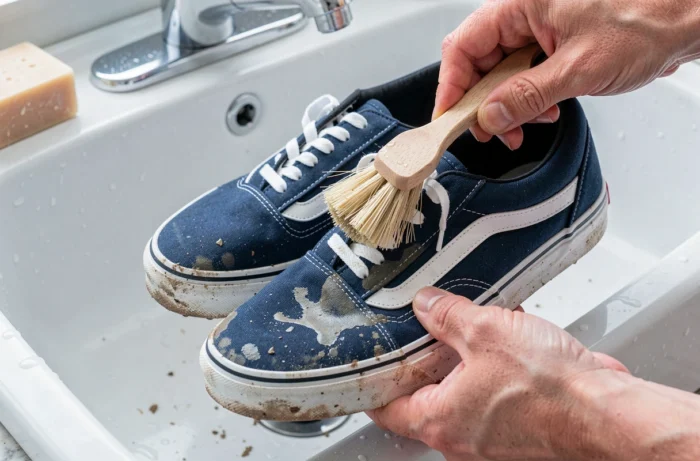
Remove the laces. Brush the suede with a soft-bristle brush to lift the fibers and dislodge embedded particles. Clean the canvas with a damp cloth or a soft brush and a bit of neutral soap. Allow to dry completely, ideally overnight in the open air (no radiator, no hairdryer; direct heat distorts the canvas and dries out the suede).
Once the pair is perfectly dry, apply the product outdoors or in a well-ventilated room. Keep the bottle at a consistent distance and proceed with horizontal passes. Two thin layers are better than one thick layer: the first penetrates, the second seals. Wait between the two layers until the surface is no longer sticky to the touch.
Replace the laces only after the treatment has dried completely. A lace placed on an area still damp with product may stick and leave a mark.
Renewal Frequency and Factory-Water-Repellent Vans Old Skool Models
No waterproofing treatment is permanent. Abrasion from the ground, friction, and successive cleanings degrade the protective layer. On a regularly worn pair, renewing every few weeks of active wear maintains functional protection. If water droplets stop beading and start soaking into the canvas, it’s time to retreat.
There are now versions of Vans Old Skool marketed with a factory-applied water-repellent treatment. The Old Skool WR (water-repellent) model, distributed notably in Asian and European markets, incorporates resistance to light rain from the moment of purchase. This factory treatment delays the need for a spray, but it does not eliminate the need for regular maintenance in the long term.
These WR models are a relevant option for those who frequently wear their Old Skool in the rain and prefer to avoid the hassle of periodic spraying, at least during the first months of use.
The choice between treating a classic pair yourself or buying a pre-treated model mainly depends on the frequency of exposure to rain. For occasional urban use in a downpour, a well-applied spray is sufficient. For daily wear in a humid climate, a factory water-repellent model combined with spaced spray renewals offers the best protection.