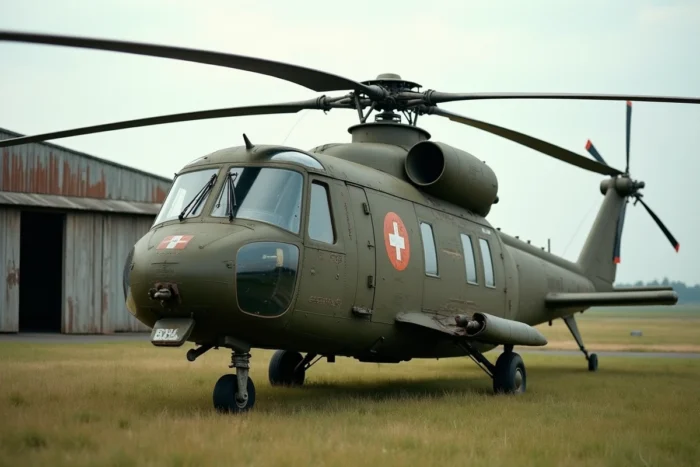
When a Fennec takes off at night to neutralize a drone above a sensitive site in mainland France, we are far from the first Alouette landing on rudimentary airstrips in Algeria. The French military helicopter has changed its mission, engine, and doctrine over a few decades, but the common thread remains the same: adapting the machine to the constraints of the terrain.
Anti-drone fight on Fennec: when a 1990s helicopter changes its mission
Since 2024, the Fennec helicopters of the Air and Space Force have been equipped with jamming rifles to intercept low-altitude drones. We are talking about a lightweight aircraft, originally designed for liaison and training, converted into an anti-drone sentinel above sensitive sites and during major events.
This shift illustrates a recurring reflex in French military aviation: extending the operational life of a platform by adding a new capability. The Fennec has not been redesigned. Its cockpit, turbine, and low-speed maneuverability were already suitable for the flight profile required to track a slow, short-range drone.
To delve deeper into the history of French military helicopters, one must understand this logic of permanent adaptation: each generation of machine eventually fulfills roles that its designers had not anticipated.
Alouette and Gazelle in the Algerian War and beyond: the first French combat helicopters
The Alouette II, introduced in the 1950s, laid the foundations of French aeromobility. The first helicopter in the world equipped with a gas turbine, it enabled rapid medical evacuations in terrains where no airplane could land. In Algeria, crews improvised helicopter transport tactics that did not exist in any manual.
The Gazelle took over with a more offensive profile. Armed with missiles, it became the first combat helicopter produced in France. Its sleek silhouette and speed made it a suitable fire support tool in theaters where the ground-to-air threat remained moderate.
Super Frelon and Puma: heavy transport takes shape
The Super Frelon, an imposing tri-engine helicopter, met the needs of the French Navy for heavy transport and anti-submarine warfare. The Puma, developed in cooperation with the United Kingdom, standardized troop transport in the Army. These two machines have been deployed on all continents, from Lebanon to Chad.
This reflects a pattern typical of the French industry of the time: Sud-Aviation, then Aérospatiale, simultaneously developed light and heavy airframes to cover the entire spectrum of missions. This strategy allowed France to be independent of any foreign supplier for its frontline helicopters.
Franco-German Tiger: an attack helicopter born from European cooperation
The Tiger program, launched with Germany in the early 1990s, marked a turning point. For the first time, France agreed to share the design of a combat helicopter with a foreign partner. The result is a specialized aircraft for attack and fire support, capable of operating at night and in hostile environments.
The Tiger has been deployed in Afghanistan, Libya, and the Sahel. Feedback from the field highlighted its strengths (shooting accuracy, cockpit armor) but also logistical constraints related to maintaining a complex aircraft far from its European bases.
- Close air support in coordination with ground troops, including in areas where the anti-air threat evolved rapidly
- Armed reconnaissance missions at night using optronic sensors and helmet-mounted sights
- Deployment in external operations with a sometimes constrained availability rate due to the distance from maintenance chains
H160M Guépard: the French helicopter fleet in full transformation
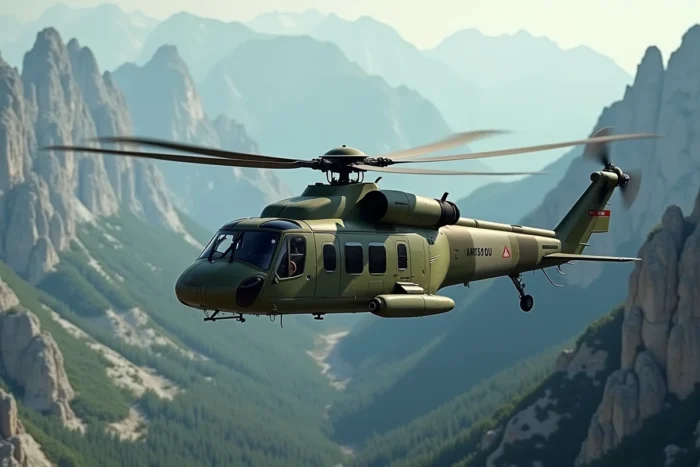
The Ministry of the Armed Forces plans to order 169 H160M Guépard helicopters for the three branches of the military. The goal is to replace a heterogeneous fleet composed of Gazelle, Fennec, Dauphin, and Panther with a single platform available in several versions.
This standardization addresses a concrete problem: maintaining several different types of aircraft in flying condition is costly in terms of parts, training, and maintenance hours. A single type of airframe simplifies the entire logistics chain, from pilot training to support in external operations.
What the Guépard changes on the ground
The H160M features optimized main rotor blades and a redesigned rear fenestron that significantly reduces the acoustic signature. For crews, less noise means a more discreet approach in conflict zones.
Feedback varies on the exact timeline for ramping up, but the trajectory is clear: by the end of the decade, the Guépard is expected to become the backbone of the French helicopter component. The ongoing military programming law confirms this priority.
- Replacement of Gazelle and Fennec in reconnaissance, liaison, and anti-drone missions
- Taking over naval missions currently performed by the Dauphin and Panther of the French Navy
- Modular payload capacity allowing for quick transitions from a medical configuration to an armed configuration
The French military helicopter sector follows a cycle that has repeated since the 1950s: an aircraft is designed for an identified need, the terrain imposes adaptations, and the next generation incorporates this feedback. The Guépard is no exception. Its success will be measured in operational theaters, not in industrial brochures.