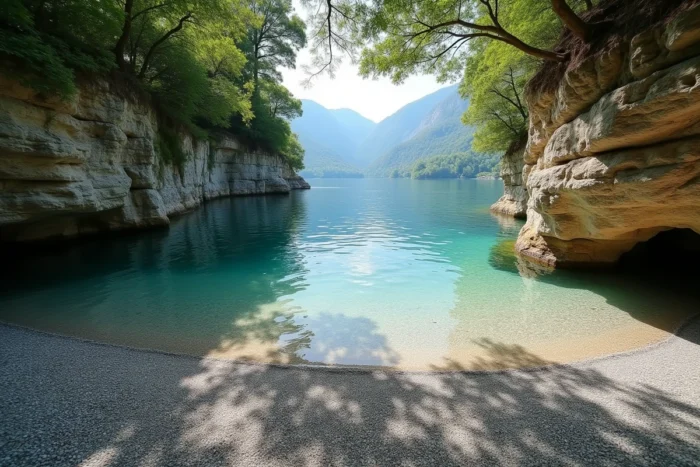
The Bourget Lake hides about ten coves accessible only by waterway, located along a west bank that is almost devoid of roads. Their attendance varies depending on the mode of access, the time of day, and the regulations in force. Comparing these parameters allows one to choose the right cove, at the right time, with the right means of transport.
Access to the coves of Bourget Lake: boat, paddle, or hiking trail
Not all coves are equal from a logistical point of view. The mode of access determines travel time, the usable time slot, and the level of isolation once on site.
| Mode of access | Accessible coves | Main constraint | Level of isolation |
|---|---|---|---|
| Motorboat (rental) | Entire west bank | Compliance with speed zones | High |
| Paddle or kayak | Coves close to launch points (Conjux area, Bourdeau) | Mandatory return before sunset | Medium to high |
| Hiking trail | Lamartine Cave, Cul du Bois beach | Steep path, limited parking | Low to medium |
The motorboat remains the only means to reach the most remote corners of the west bank, facing the Dent du Chat. In contrast, the paddle allows for a silent approach that is better suited for coves located less than half an hour of paddling from a launch point.
For those wishing to explore the coves of Bourget Lake without a boat, a few steep trails exist, but they only serve a handful of sites.
Paddle and gentle navigation regulations on Bourget Lake
A local campaign launched in 2024-2025 has strengthened safety guidelines for gentle navigation. These rules directly modify the exploration window of isolated coves, particularly for non-motorized users.
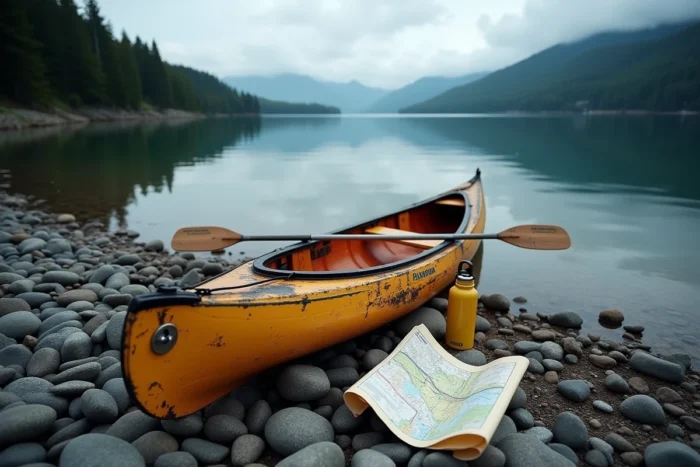
- Mandatory return before sunset: paddle or kayak outings must be planned with sufficient time margin, which excludes the most distant coves at the end of the day.
- Enhanced compliance with speed zones and motorized navigation corridors: non-motorized vessels must stay clear of areas frequented by motorboats.
- Obligation to return as soon as the wind picks up: on a lake nestled between mountains and cliffs, gusts can appear without warning and make returning by paddle physically dangerous.
These constraints, rarely mentioned in tourist guides, reduce the usable paddling window to the morning and early afternoon. The coves on the west bank located beyond the Conjux area effectively become reserved for motorized vessels for anyone wanting to swim there safely.
West bank of Bourget Lake: geology and water quality of the coves
The west bank of the lake, backed by limestone cliffs rising towards the Dent du Chat, concentrates the majority of coves inaccessible by road. The limestone creates vertical walls that plunge directly into the lake, forming small inlets protected from the east wind.
The absence of roads and nearby construction limits runoff water inputs. The waters are described as warm and crystal clear by local water sports providers, a description consistent with the low mixing in these sheltered inlets.
The Conjux area, in the northwest, is home to several flat rocks that serve as natural platforms for sunbathing. In contrast, the coves facing east receive sunlight from sunrise and remain illuminated until mid-afternoon.
Lamartine Cave and Bourdeau Trail
Lamartine Cave, nestled in the cliff between Brison-Saint-Innocent and Viviers-du-Lac, is one of the few spots accessible on foot. The starting point is from the town hall of Bourdeau (free parking), then a steep path descends to the shore. The atmosphere is described as almost Mediterranean, with wind-twisted pines and slanting light hitting the light rock.
This site attracts more visitors than the coves accessible only by boat. The trail does not present any major technical difficulties, but it requires particular caution on the slippery rocky passages.
Lake weather and planning outings to the coves
A recent tool changes the game for exploring the coves: Lake Weather, launched on July 2. This specialized service provides forecasts tailored to water bodies (wind, storm risk, water quality), allowing for anticipation of conditions before heading to an isolated cove.
On Bourget Lake, wind is the main limiting factor. Gusts can surprise light vessels in a matter of minutes on this lake nestled between cliffs and mountains. Consulting this specialized weather before a paddle or kayak outing to the coves on the west bank avoids unpleasant surprises.
Swimming is also prohibited before the official opening date, even if the banks remain accessible for walking. The coves are no exception: access to the water outside the authorized period is prohibited for safety reasons.
Choosing a cove on Bourget Lake comes down to a trade-off between isolation and accessibility. The most preserved coves require a motorboat and a stable weather window. The pedestrian sites offer less solitude but remain valid alternatives outside weekends.
The regulations on gentle navigation reduce the paddle window to the central hours of the day. This factor mechanically directs explorers towards boat rentals for the most remote coves.