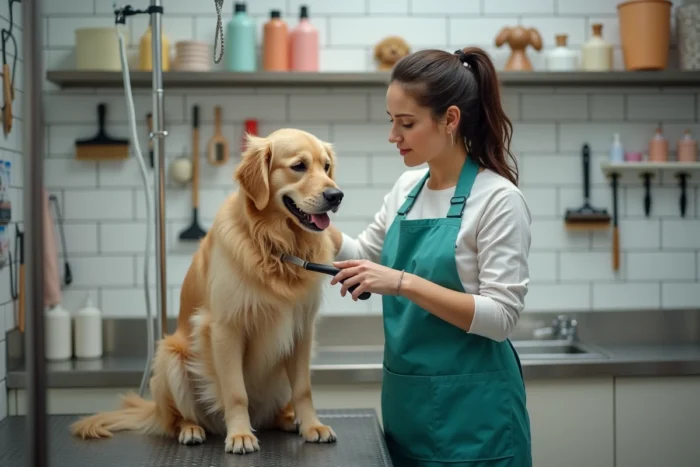
Dog grooming is not just about a monthly bath. The texture of the coat, the sensitivity of the skin, and the breed’s conformation dictate a precise protocol, from the choice of brush to the frequency of plucking. We still observe too many coats damaged by inappropriate actions or poorly calibrated equipment.
Knife plucking versus scissor cutting: two approaches to coat work
For hard-coated breeds (terriers, schnauzers, wire-haired dachshunds), grooming is based on plucking, not cutting. The stripping knife removes dead hair from the root, preserving the rough texture of the coat and stimulating the regrowth of a dense undercoat. Cutting with scissors or clippers alters the structure of a hard coat: it grows back softer, often duller, and loses its protective function against moisture.
We recommend testing the maturity of the hair before each session. Hair ready to be plucked comes away with a light tug, without resistance. If the dog shows discomfort, the hair is not yet at the right growth stage.
For long or curly-haired breeds (bichons, poodles, shih tzus), scissor or clipper cutting remains the norm. Finishing combing before cutting prevents irregularities. A groomer who cuts without detangling beforehand produces an uneven result and risks hiding deep knots that irritate the skin.
Find the cat grooming price on Animal News to compare rates between species and adjust your budget.
Dog grooming frequency according to coat type
Applying a single schedule to all breeds is a common mistake. The frequency depends on the type of hair, not the size of the dog.
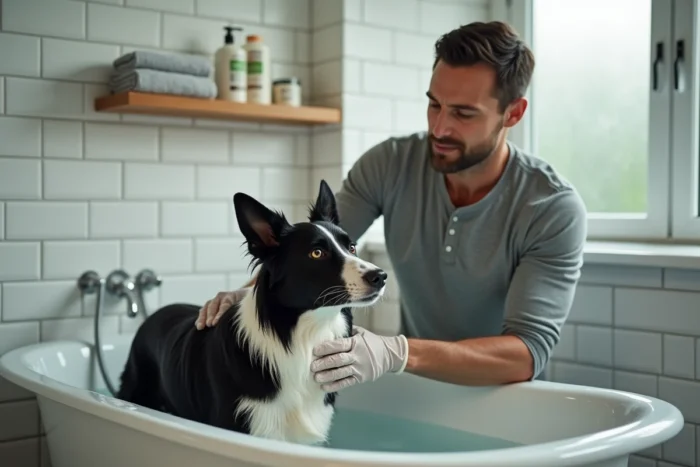
- Short hair (beagle, boxer, pointer): weekly brushing with a rubber glove is sufficient. Bathing remains occasional, a few times a year, unless there is significant dirt.
- Medium to long hair (golden retriever, collie, australian shepherd): brushing two to three times a week to avoid knots. A visit to the groomer every two to three months for complete maintenance.
- Curly or woolly hair (poodle, bichon, lagotto): daily or every other day brushing, with a professional visit every four to six weeks. Neglected undercoat can form mats.
- Hard hair (fox terrier, airedale, griffon): knife plucking according to the shedding cycle, generally three to four times a year. Bathing is limited to avoid softening the hair texture.
Too frequent bathing destroys the skin’s natural lipid film. The result: flaking, itching, increased sebum production. We observe this vicious circle in dogs washed every week with inappropriate shampoos.
Dog grooming prices: what affects the cost
Prices vary greatly depending on the breed, size of the animal, condition of the coat, and requested service. Routine maintenance on a small dog with a well-kept coat costs significantly less than a complete detangling on a Newfoundland whose coat has not been brushed for months.
Factors that increase the bill
The time spent by the professional is the primary factor. A dog with severely matted fur may require more than an hour of detangling even before the bath. Some salons charge extra for knots, while others refuse detangling and offer a short clip instead.
Knife plucking takes longer than clipper cutting, which is reflected in the price. For a medium schnauzer, expect a session duration significantly longer than a standard cut on a similarly sized poodle.
Ear cleaning, nail trimming, and anal gland emptying are sometimes included in the package, sometimes charged extra. Check the details of the service before comparing prices between salons.
Choosing a professional groomer: verifiable criteria
Since the overhaul of procedures by the Ministry of Agriculture, professional groomers must be registered with the DDPP via the National Operator Database at least thirty days before starting their activity. This registration, renewable in case of change of premises or veterinary health officer, is a first indicator of seriousness.
The ACACED certificate (Certificate of Knowledge for Companion Animals of Domestic Species) attests to a foundation of knowledge in animal welfare. It is not always mandatory for grooming alone, but holding it shows a voluntary approach.
What to observe in a grooming salon
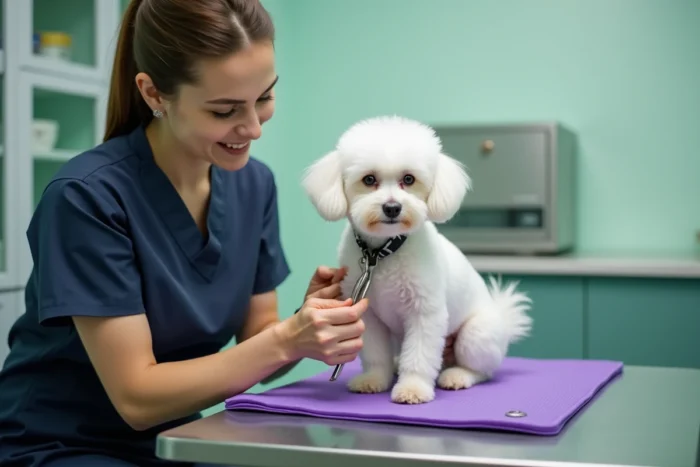
Look at the equipment: adjustable tables with safety arms, a bathtub suitable for large breeds, adjustable airflow dryers. A dryer that is too powerful on an anxious dog increases stress and can cause skin burns.
Also observe the management of the dog. A competent professional respects the animal’s pace, offers breaks, and never uses harsh physical restraint. The first sessions for a puppy should be short and focused on gradually desensitizing to the sound of the clippers, contact with water, and handling of the paws.
The sector’s upgrade (dog spas, light therapy, treatments with vegetable oils) responds to a growing demand for animal welfare. These high-end services do not replace well-executed technical grooming, but they reflect an evolution of the profession towards more personalization.
Grooming remains a care act before being an aesthetic act. A properly maintained coat protects the skin, regulates body temperature, and limits skin infections. Adapting the protocol to each dog, with the right tool and frequency, makes all the difference between a routine maintenance and a real benefit for the animal.