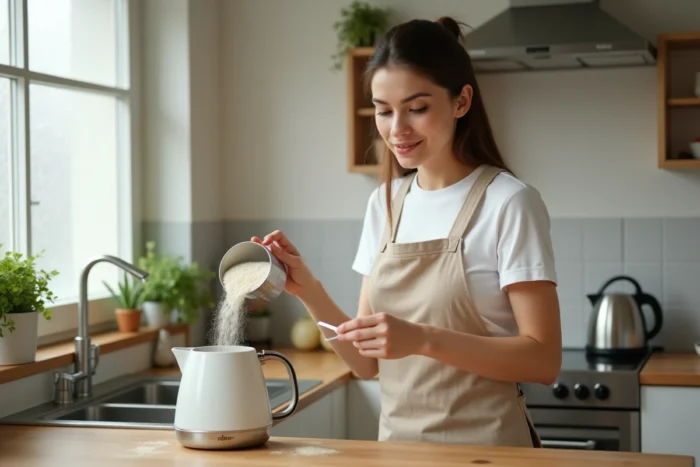
An electric kettle heats water faster than a stovetop and consumes less energy to reach boiling. This observation opens up a cooking method for rice that is unknown to the general public, although it is common in university residences and hotel rooms in Asia. The principle is based on hot soaking: pouring boiling water over the rice in an insulated container, covering it, and then allowing the grains to absorb the liquid without maintaining a heat source.
Hot soaking in a kettle: the cooking mechanism
Cooking rice does not require prolonged boiling. Once the boiling water comes into contact with the grains, the starch begins to swell and gelatinize. If the container remains covered, the temperature drops slowly and cooking continues through absorption.
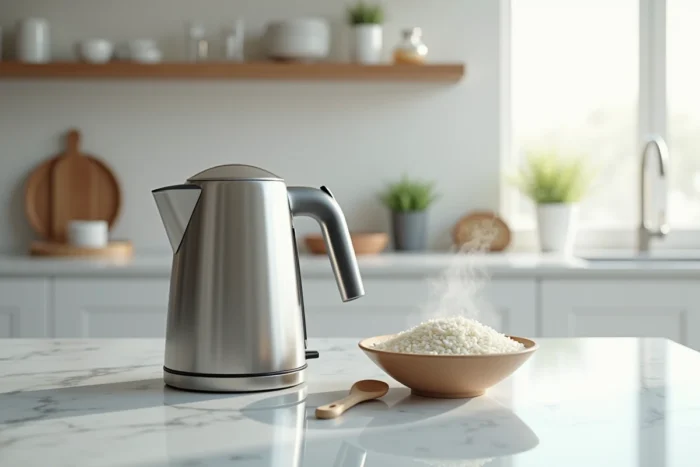
To utilize this phenomenon with an electric kettle, two approaches must be distinguished. The first involves boiling water in the kettle, then pouring it over the rice placed in a heat-resistant bowl (tempered glass, thick ceramic, stainless steel). Cover with a plate or lid, and let it rest.
The second, more direct approach, uses the kettle’s own tank as the cooking container, placing the rice and water inside before starting the boiling cycle.
Knowing how to cook rice with a kettle is based on this logic: the appliance provides the initial heat, and the closed container does the rest.
Which type of rice works best
Not all rice reacts the same way to hot soaking. Parboiled or instant rice yields the best results because it has already undergone an industrial gelatinization process. Just a few minutes of immersion in boiling water is enough to achieve tender grains.
Long-grain white rice (such as basmati or Thai) also works, provided it is rinsed beforehand and the resting time under the lid is extended. Brown rice, on the other hand, requires too long a cooking time for this method: the temperature drops before the bran has had time to soften.
Water-rice ratio and resting time according to the chosen method
The amount of water changes depending on whether the rice is soaking in an external bowl or directly in the kettle’s tank.
- In an external bowl with a lid: use about one and a half volumes of boiling water for one volume of rinsed white rice. Seal tightly and let it rest for about twenty minutes without lifting the lid.
- In the kettle’s tank (parboiled rice): pour the rice and cold water into the kettle, start the cycle. As soon as the appliance automatically shuts off at boiling, let it rest in the closed tank for about ten minutes.
- In the kettle’s tank (raw white rice): same procedure, but restart the boiling cycle a second time after a few minutes of pause, then let it rest with the lid closed. The double cycle compensates for the lack of low heat maintenance.
Rinsing the rice beforehand remains a step not to be skipped. It removes excess surface starch and prevents a sticky result.
Precautions for the kettle and limits of the method
Cooking rice in the tank of an electric kettle raises maintenance questions. The starch released by the grains deposits on the heating element and the internal walls. On a stainless steel kettle with a visible heating element, this deposit can brown and become difficult to clean.
Protecting the kettle
After each cooking in the tank, immediately rinse the kettle with warm water and gently scrub with a non-abrasive sponge. Do not let the starch dry on the heating element, or you may have to resort to white vinegar and prolonged soaking.
Kettles with adjustable temperature offer an advantage: you can set a temperature slightly below a full boil, which reduces splashes of starchy water and the risk of overflow.
What this method does not replace
Hot soaking in a kettle does not allow for making risotto (which requires a gradual incorporation of liquid and constant stirring) or pilaf rice (which starts with toasting the grains in fat). It is suitable for plain white rice as a side dish, either plain or lightly seasoned after cooking.
The capacity of a standard kettle also limits the quantities. Preparing more than two servings at once becomes impractical: the rice expands and occupies a volume that the tank cannot accommodate.

Electric kettle and energy savings for rice preparation
Bringing water to a boil in an electric kettle and then pouring it into an insulated container consumes less energy than direct heating on a stovetop for the entire cooking duration. The kettle concentrates its power on a small volume of water, reaches boiling quickly, and then shuts off.
On a ceramic or induction stovetop, maintaining low heat for a quarter of an hour occupies the burner and generates lateral heat losses. The kettle-plus-covered-bowl method eliminates this maintenance. The heat accumulated in the water does the work without additional consumption.
This approach is particularly interesting for homes equipped with just a water point and an electrical outlet, without a full kitchen. A ceramic bowl, a kettle, and parboiled rice are enough to produce a decent side dish in just a few minutes.
The kettle rice method does not claim to rival a dedicated rice cooker or a pot on controlled heat. It solves a specific problem: preparing edible rice with minimal equipment, leveraging an appliance that most households already own. Parboiled rice remains the most reliable candidate, and immediate cleaning of the tank avoids any unpleasant surprises for the next coffee.