
A personalized cup distributed without prior thought ends up in a cupboard after three days. Choice of branding, material, timing of distribution, connection to internal culture: when these parameters are aligned, the personalized cup in the workplace becomes a genuine internal communication tool that circulates daily, between the coffee machine and the meeting room.
Subtle branding or event visuals: what determines the reuse of the cup
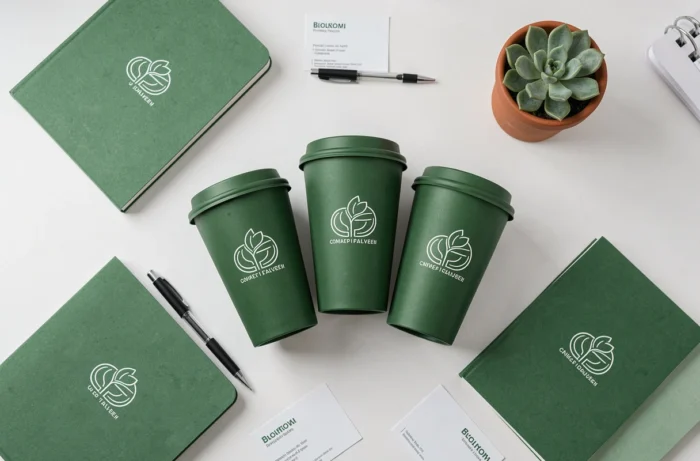
A branding too closely tied to a one-time event (annual seminar, open house) limits the perceived lifespan of the cup. Once the date has passed, the item loses its relevance in the eyes of the employee. We observe that cups branded with a subtle logo are reused more than those featuring a photo or dated visual.
The reason is simple: a reusable cup with a discreet logo fits into all contexts, from coffee breaks to lunch in an open space. It does not signal a past marketing operation; it reminds of ongoing belonging.
The choice of printing technique also comes into play. A well-executed screen printing or pad printing withstands several hundred washes, whereas a glued sticker degrades quickly. The quality of the branding directly affects the longevity of the item and, by extension, the duration of exposure to the company’s message.
The gap between a premium-looking cup and an item perceived as cheap can reverse the desired effect: instead of enhancing the employer brand, a poorly finished cup signals a lack of care.
We recommend systematically validating a pre-production sample before placing an order. Check the durability of the logo after about thirty wash cycles, the color consistency with your graphic charter, and the absence of smudges on the solid colors.
Personalized cup and onboarding: turning a goodie into an integration ritual
In internal communication, the personalized cup does not function like a classic promotional item: it is about adopting the personalized cup in the workplace as a structuring element of the employee journey, not as a gift distributed en masse during a welcome party.
Integrating the reusable cup into the onboarding kit changes its perception. It arrives at the same time as the badge, laptop, and welcome booklet. It is associated with a beginning, with belonging. This temporal positioning changes everything: the employee does not store it with the accumulated goodies; they use it from day one.

To reinforce this anchoring, some HR teams assign a cup per department or site, with a variation in color or pattern. The cup then becomes a visible team marker in common areas, facilitating informal exchanges between newcomers and existing employees.
Connecting the cup to an internal digital system
An emerging use involves integrating a NFC sticker under the cup or bottle. Scanned with a smartphone, it redirects to a welcome page, a team directory, an internal contest, or content reserved for employees. This bridge between the physical object and digital resource transforms the cup into an entry point to the company’s internal ecosystem.
This type of device works particularly well in multi-site structures, where cohesion comes through shared tools rather than physical proximity. The NFC cup becomes a measurable internal communication vector, as each scan generates engagement data.
Specifications for the reusable cup: avoiding the gadget effect internally
The difference between a cup that ends up at the back of a drawer and a cup that circulates for months lies in a few technical specifications and a rigorous initial brief. Here are the criteria to lock in before placing an order:
- Material suitable for actual use: a polypropylene cup is suitable for the coffee machine and water fountains, but a double-walled stainless steel mug is preferred for hot drinks at the office. Choosing the wrong format for the context of use guarantees quick abandonment.
- Capacity aligned with internal equipment: check the size of the cup holders of vending machines and coffee machines. A cup that is too wide or too tall to fit under the spout simply will not be used.
- Weight and thickness sufficient to inspire confidence: a cup that is too thin or too flexible gives an impression of fragility. A cup with sufficiently dense walls reassures about its durability and encourages reuse.
- Personalization limited to the graphic charter: logo, corporate colors, possibly a baseline. No promotional slogans or event dates.
The brief sent to the supplier must specify the guaranteed number of washes, dishwasher compatibility, and the food safety certifications of the material (European compliance for food contact). These elements are not secondary technical details: they condition the credibility of the approach with employees.
Made in France manufacturing: an internal communication argument
Choosing a reusable cup made in France adds a layer of meaning to the initiative. Employees are increasingly attentive to the consistency between their employer’s CSR discourse and concrete sourcing choices. A locally produced ecocup reinforces the credibility of the environmental commitment displayed internally.
This manufacturing origin can appear on the cup itself (mention “Made in France” or a discreet flag), which fuels spontaneous conversations in the break room. Internal communication does not only occur through newsletters or displays: it is also built through everyday objects.
Measuring the impact of the cup on internal communication
A personalized cup distributed without follow-up remains an expense, not an investment in communication. A few simple indicators allow for assessing its real effect.
- Visible presence rate: count the number of personalized cups used in the break room or meeting two months after distribution. A rate above half of the equipped employees indicates good adoption.
- Reduction of disposable cups: if your company tracks its consumable purchases, a decrease in orders for single-use cups constitutes a reliable indirect indicator.
- Digital engagement (if NFC deployed): number of scans, pages viewed, participation in internal contests related to the initiative.
These data feed into CSR reporting and provide a concrete argument during internal communication assessments. The personalized cup ceases to be a goodie: it becomes a tool whose return is measured.
The last trap to avoid is over-distribution. Offering a new cup at every internal event saturates employees and trivializes the item. A single quality reusable cup, distributed at the right time, is more likely to remain on desks than an accumulation of successive models.