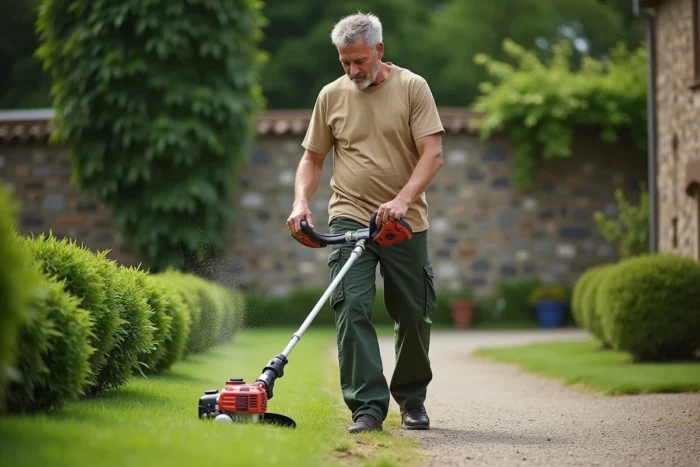
On a sloped terrain with brambles climbing along a low wall, an electric corded trimmer quickly shows its limits. The power cord stretches, power is lacking as the vegetation thickens, and you end up forcing the machine. It is precisely in these configurations that a gas trimmer makes perfect sense: total autonomy, immediate torque, and the ability to tackle tall or semi-woody grasses without stalling.
However, you need to choose the right model. Between engine displacement, type of line, harness ergonomics, and recent regulatory constraints, the parameters to consider are more technical than they seem.
2-stroke or 4-stroke engine: a choice that changes daily use
The majority of consumer gas trimmers come with a 2-stroke engine. You mix oil with gasoline, pull the starter, and off you go. The power-to-weight ratio is good, and the mechanics remain simple to maintain. For a medium-sized garden with standard borders, this is sufficient.
Compact 4-stroke engine models are multiplying in residential ranges. Their main advantage is tangible: less smoke, reduced noise levels, and lower fuel consumption. These engines are found in displacements ranging from 25 to 35 cm³, which widely covers the needs of an individual. Feedback varies on the weight difference compared to 2-strokes, but the general trend shows a decreasing gap year by year.
To effectively compare the technical characteristics of different gas models, you can rely on the detailed sheets published on coupebordurethermique.fr, which reference both 2-stroke and 4-stroke models.
Engine displacement and cutting width of a gas trimmer: what to really look at
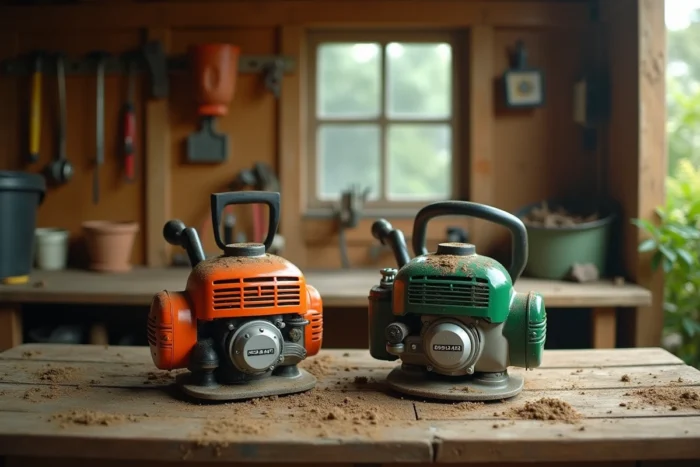
It is often said that you should choose the highest possible displacement. In reality, an oversized engine for edging work makes the machine heavier and increases fatigue. The displacement should correspond to the type of vegetation, not the size of the garden.
- For soft grass along paths or flower beds, a modest displacement (around 25 cm³) offers a good compromise between lightness and cutting power.
- On terrains with dense grasses, nettles, or woody regrowth along hedges, you move to models close to 30-35 cm³ that maintain their speed without straining.
- Beyond that, you enter the territory of brush cutters, a different tool designed for clearing rather than edging.
The cutting width deserves equal attention. A wide head covers more area with each pass, but complicates precision work around tree bases or between patio slabs. For pure finishing use, a moderate width allows you to work closely without scalping the lawn.
Cutting line and head: two elements that determine the quality of the result
The cutting line is not a secondary detail. A line that is too thin breaks repeatedly in thick grasses. A line that is too thick unnecessarily strains the engine on short grass. You adapt the diameter to the dominant vegetation in your garden.
A square or star-shaped line cuts more cleanly than a round line, because it slices the stem instead of tearing it out. The cut is cleaner, the grass regrows more uniformly, and the visual result is directly affected on the edges.
Semi-automatic or manual line head
The semi-automatic head releases line when you tap the ground. It is the most common and practical system for regular use. The manual head requires you to stop the engine to unwind line, which disrupts the work rhythm. On a terrain with many borders to treat, the semi-automatic head saves real time.
Noise and emissions regulations: a constraint to consider before purchase
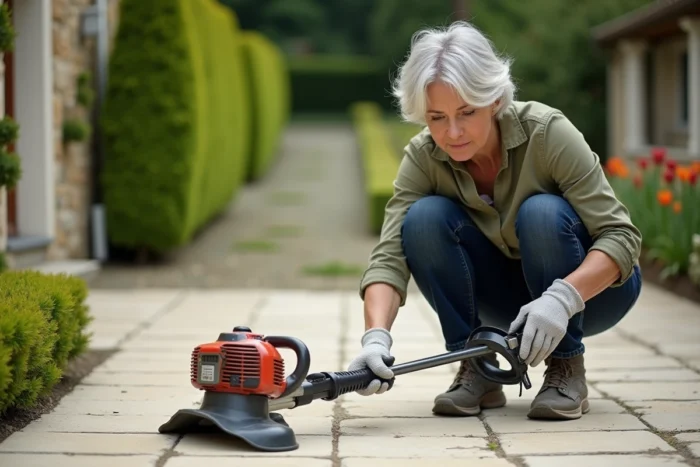
Gas trimmers are subject to European emission standards applicable to small off-road engines (NRMM regulations). Manufacturers are gradually adapting their ranges to reduce particle and gas emissions, resulting in cleaner engines but sometimes also the discontinuation of certain entry-level models.
In densely populated residential areas, noise remains the most sensitive factor. Several municipalities already regulate the hours of use for gas garden tools. Checking municipal noise regulations before investing in a gas model avoids unpleasant surprises, especially if your maintenance sessions fall on the weekend.
A 4-stroke engine generally operates at a lower noise level than a 2-stroke, which can make a difference for regular use in a subdivision.
Ergonomics and harness: what separates a decent tool from a tool that can be used for a long time
A gas trimmer weighs significantly more than an electric model. Without a suitable harness, fatigue sets in within the first half hour, and vibrations travel up the arms and shoulders.
- The double shoulder harness distributes the weight across both shoulders and relieves the back, especially during sessions longer than twenty minutes.
- The loop handle (D-type) is suitable for flat and clear borders. The handlebar handle (U-type) offers more control on uneven or sloped terrains.
- An anti-vibration system integrated into the handle reduces muscle fatigue during long sessions. This is a criterion to check as a priority if you maintain a large garden.
Ultimately, choosing a suitable gas trimmer relies on three adjustments: the displacement calibrated to the actual vegetation of your terrain, a cutting line whose section corresponds to the dominant use, and ergonomics that allow you to work without exhausting yourself. A well-chosen model on these three axes will last for years and provide a clean result with each pass.